Bandhani Is Back: How Indian Brides Are Wearing This Tie-Dye Classic in 2026
Every few wedding seasons, a fabric your nani wore without thinking twice suddenly turns up on the runway looking brand new. That is exactly what has happened with Bandhani. The tiny tie-dye dots that once lived mostly in Gujarati and Rajasthani households are now showing up on lehengas, jumpsuits, and even bridal shoes. If you are planning your outfits and wondering whether Bandhani still fits a modern wedding, short answer: yes, and it is doing more than you would expect.
Why This Fabric Never Really Went Away
Bandhani gets its name from the Sanskrit word for “to tie,” and the technique is exactly that literal. Artisans pinch tiny sections of cloth, tie them off with thread, then dip the fabric in dye. Untie the knots and you get those signature dotted patterns. It is slow work, done mostly by hand in Gujarat and Rajasthan, which is part of why it still feels special even after thousands of years on Indian looms. For brides browsing bridal wear options, that handmade quality is what separates a real Bandhani piece from a printed imitation.
Bandhani Lehengas Are Having a Real Moment
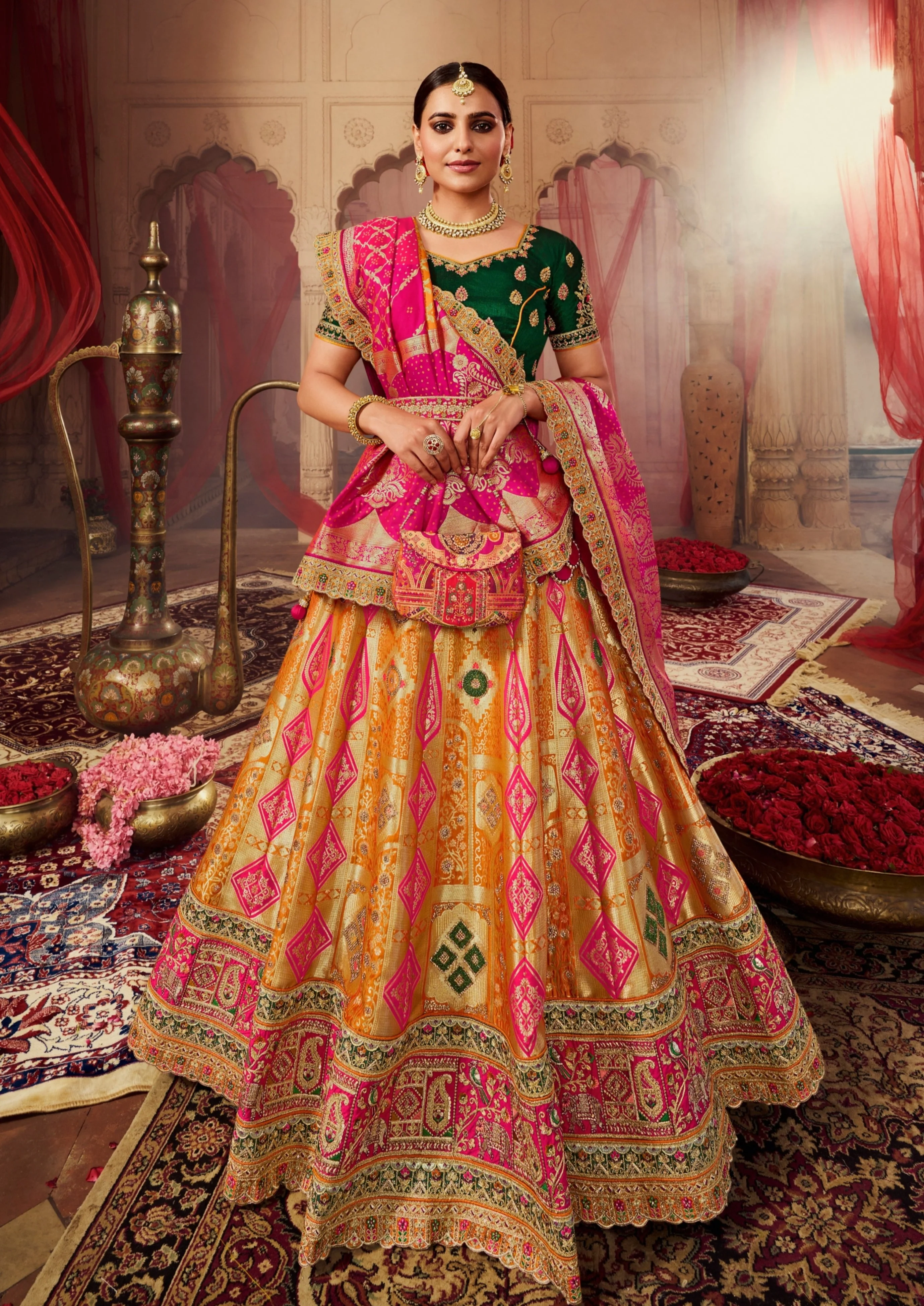
Designers have stopped treating Bandhani as a “cute regional touch” and started building entire lehengas around it. Panelled skirts in saturated pink, yellow, and red are showing up at mehendi and haldi functions everywhere, often paired with a plain blouse so the print does the talking. If you are still shortlisting silhouettes, it is worth scrolling through bridal look inspiration before you commit to a designer, since Bandhani reads very differently in a flared lehenga versus a straight skirt.
Sarees With a Bandhani Pallu Work Beautifully for Haldi
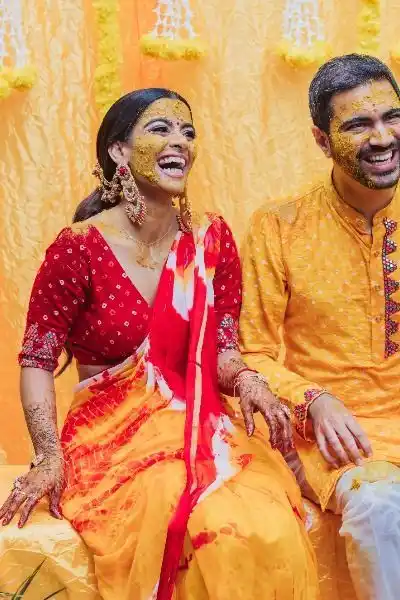
A classic Bandhani saree with a contrasting blouse is close to foolproof for a Haldi. The dotted pattern already carries a festive, sunny energy, so you do not need heavy embroidery to make a statement. Half-and-half sarees, where one half is Bandhani and the other is Banarasi silk, have become a favourite for brides who want tradition without repeating the same texture through the whole outfit. Planning the sequence of your functions? It helps to look at your Haldi function checklist early, since outfit choices tend to shift once the venue and time of day are locked in
Dupattas: The Low-Commitment Way to Wear the Trend
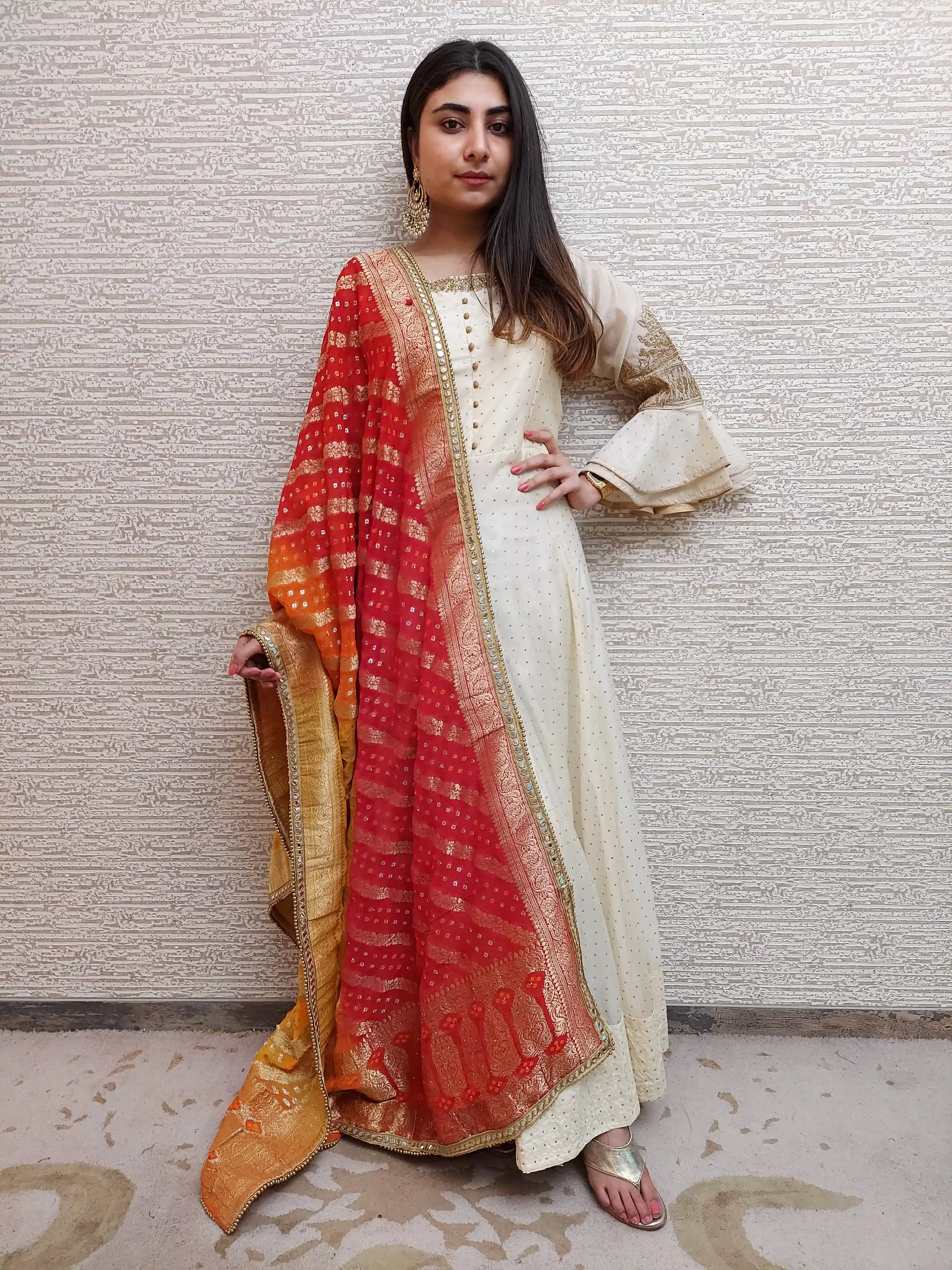
Not every bride wants a full Bandhani outfit, and honestly, you do not need one. A dual-toned Bandhani dupatta thrown over a plain kurta or suit does most of the work with none of the risk. It is also the easiest piece to reuse after the wedding, which is more than you can say for a heavily embellished lehenga. This is a solid option for the Mehendi function, where you want something festive but still comfortable enough to sit through hours of art on your hands.
Co-ord Sets and Jumpsuits, for Brides Who Want Something Different
If sarees and lehengas feel too predictable, Bandhani has moved into co-ord sets, overalls, and asymmetric jumpsuits too. These work well for smaller pre-wedding events, sangeet after-parties, or even the reception if you want a lighter alternative to a gown. Sabyasachi's Bandhani overalls became something of a talking point a few years back precisely because nobody expected to see the fabric outside a saree or lehenga. It is proof that Bandhani can flex into fairly modern shapes without losing what makes it recognisable.
Getting the Jewellery and Accessories Right
Bandhani prints are busy by nature, so the jewellery around them should not compete. Simple gold jhumkas, a single statement necklace, or a Bandhani-print potli bag tend to work better than layered, heavy sets. If you are still finalising your bridal jewellery, it is worth trying a few pieces against the actual fabric swatch rather than guessing from photos, since dot patterns can make delicate designs disappear. Browsing jewellery options alongside your outfit fittings saves you a second round of shopping later.
A Few Ways to Keep It From Looking Dated
Bandhani can slide into “costume-y” territory if it is overdone, so a few things help: stick to two or three colours per outfit, let the blouse or bottom stay solid if the main piece is heavily printed, and avoid stacking Bandhani with equally busy prints like Ajrakh or block print in the same look. If you are working with a stylist or planner, flag this early, since most experienced wedding planners have already seen which combinations photograph well and which ones fight each other in pictures.
FAQs About Bandhani
Is Bandhani only for Gujarati or Rajasthani weddings?
No. It started there, but it has been adopted across Indian wedding fashion for years now. Designers from Sabyasachi to Anju Modi have used it in collections that have nothing to do with regional dress codes.
What is the difference between Bandhani and Bandhej?
Nothing, really. Bandhej is just another name for the same tie-dye technique, used more commonly in parts of Rajasthan.
Which fabric works best for a Bandhani outfit?
Silk and georgette hold the dye and the dotted texture well, and they drape better for lehengas and sarees. Cotton Bandhani is common too, especially for daytime functions like Haldi.
How can I tell if a Bandhani saree is handmade and not printed?
Genuine Bandhani has small puckers or slight irregularities around each dot, since it is tied by hand. A printed imitation looks flat and perfectly uniform, which is actually the giveaway.
Can Bandhani be worn at a destination wedding?
Yes, and it photographs particularly well outdoors because of how the colours catch natural light. It is a popular pick for beach and palace weddings alike, worth keeping in mind if you are still comparing destination wedding venues.
Conclusion
Bandhani's biggest strength is that it does not need much help to look festive. Whether you are picking outfits function by function or trying to lock the whole wardrobe in one go, it is worth talking to a planner before the fittings start, so your outfit choices actually match your venues and timelines. Plan4Event can help you get that sequence right from the first function to the last