Bridal Veil and Dupatta Draping Styles for Every Wedding Look
A dupatta can make or break a bridal look, honestly. The same lehenga looks completely different depending on how the dupatta sits, pinned at one shoulder, flowing loose down the back, draped over the head for the pheras. It’s one of those details that photographs constantly through the day, so it deserves more thought than “just drape it and hope it stays.” This guide walks through the major draping styles, regional traditions, modern takes, and the practical tips that actually keep everything in place through a long wedding day.
Why Bridal Veil and Dupatta Draping Matters
The dupatta isn’t just an accessory sitting on top of the outfit, it genuinely changes the whole silhouette. A heavily embroidered border that’s hidden in one drape might become the entire focal point in another. For rituals specifically, the way the dupatta’s draped often carries meaning too, covering the head during the pheras, for instance, isn’t just styling, it’s tradition.
Comfort matters just as much as the look. A dupatta that’s pinned too tightly, or draped in a style that needs constant readjusting, becomes a genuine distraction during a day that’s already long and emotionally heavy. Getting the drape right once, with the right support, means one less thing to think about once the ceremony actually starts.
For a curated list of bridal makeup and styling artists, explore Plan4Event’s bridal makeup collection.
Planning your bridal look and want a styling artist who can handle dupatta draping, makeup and hair together?
Share your wedding date, city and outfit style to get started.
Find a Bridal Stylist
Single Dupatta Draping Styles
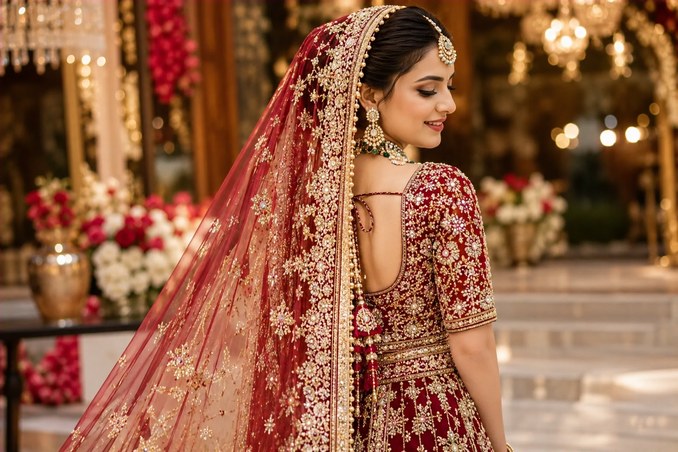
The single dupatta remains the most common approach, and for good reason, it’s simpler to manage and works with almost every lehenga style. One popular version drapes the dupatta over one shoulder, letting it fall long down the back, this shows off the lehenga’s blouse and front detailing while still giving that classic bridal silhouette from behind.
Another single-dupatta approach pleats the fabric neatly and pins it across both shoulders, framing the face symmetrically, this works particularly well for brides wanting the dupatta visible in every angle of photography rather than trailing mostly behind. For a softer, more flowing look, some brides skip heavy pleating altogether and let the dupatta drape loosely over one arm and shoulder, giving a relaxed, elegant movement that suits lighter fabrics like chiffon or organza especially well.
Double Dupatta Draping Styles
Double dupatta styling has become a genuine bridal trend rather than a niche choice, using two dupattas together, often in contrasting colours or one plain and one heavily embroidered, to add more visual depth than a single piece can manage alone.
One common double-dupatta approach drapes one over each shoulder, letting both flow down the back separately, creating a fuller, more dramatic silhouette especially useful for brides with simpler lehenga skirts who want more visual richness up top. Another version layers the two, a plain base dupatta underneath with a heavily embellished one draped on top, so the embroidery catches light and attention while the base adds body and structure. Some brides also use the second dupatta specifically as a head covering for the ceremony itself, keeping the main dupatta draped normally while a lighter second piece handles the ritual coverage.
Punjabi Bridal Dupatta Draping
Punjabi bridal draping has its own distinct character, built around rich, heavy dupattas, often in deep red or maroon with gota or phulkari-style embroidery, that carry real weight and presence. The classic approach pleats the dupatta and pins it securely over both shoulders, with the embroidered border positioned to frame the face clearly, since Punjabi bridal dupattas are typically meant to be a visible, central part of the overall look rather than a background element.
For the actual ceremony, many Punjabi brides cover the head with the dupatta pulled forward, a gesture tied to tradition and modesty during the rituals, before it’s styled back for photos and the reception afterward. The khadi border, a distinct woven edge common in Punjabi dupattas, is often deliberately kept visible along the draped edge, since it’s considered one of the more beautiful structural details of the fabric itself.
Rajasthani Bridal Odhani Draping
Rajasthani bridal draping centres on the odhani, a dupatta style known for its vibrant tie-dye patterns, like bandhani, and typically more voluminous fabric than draping styles from other regions. The traditional approach covers the head fully and drapes down one side, with the fabric’s border and pattern work displayed prominently along the visible edge.
What makes Rajasthani draping distinct is how much fabric is actually used, odhanis tend to be larger, giving brides enough material to create fuller, more dramatic pleating than a standard dupatta allows. Mirror work and gota detailing, common on Rajasthani odhanis, are often positioned deliberately along the forehead-facing edge, so the sparkle catches light right where it’s most visible in photos.
Modern Bridal Veil Draping Styles
Contemporary bridal looks have borrowed the Western veil concept and reworked it for Indian bridal wear, a sheer, flowing veil attached at the back of the head, worn alongside or instead of a traditional dupatta, giving a softer, more ethereal effect that’s become popular for fusion and destination weddings specifically.
Another modern approach drapes the dupatta asymmetrically, pinned high on one shoulder and left completely loose on the other, creating movement and a less structured, more candid-photography-friendly silhouette compared to the symmetrical traditional styles. Cape-style dupatta draping has also grown in popularity, where the fabric is structured more like a cape than a traditional drape, giving a distinctly contemporary, almost gown-like silhouette that pairs well with indo-western lehenga styles.
Muslim Bridal Veil Draping Styles
Muslim bridal veil styling often blends traditional dupatta draping with hijab-style coverage, depending on the bride’s personal preference and family tradition. One common approach drapes a softer, lighter dupatta over a base hijab, letting the outer layer flow more loosely for visual effect while the hijab underneath stays secure and fully covering.
For brides wanting a more elaborate bridal veil specifically, layered tulle or net veils, often embellished with delicate embroidery or pearl detailing along the edges, are draped over the head and allowed to flow down the back, similar in spirit to a Western bridal veil but styled to suit the overall ensemble. Pinning matters more here than in most other styles, since the veil often needs to stay secure through both the ceremony itself and extended photography afterward.
Dupatta Draping Styles for Reception and Engagement
Reception and engagement looks tend to favour lighter, less ritual-bound draping, since there’s no specific ceremonial requirement to cover the head the way the wedding day itself often calls for. A dupatta draped loosely over one shoulder, left to flow naturally rather than pinned into tight pleats, suits the more relaxed, celebratory mood of these functions well.
Some brides skip the dupatta over the shoulder entirely for a reception gown or heavily indo-western outfit, opting instead for a dupatta styled as a wrap around the arms or draped dramatically from the back, more of a styling accessory than a traditional cover. For engagement looks specifically, a shorter, lighter dupatta or even a stole-style drape works well, giving some of the visual richness of a full dupatta without the weight or structure needed for a full bridal ensemble.
For help coordinating your bridal look with outfit, jewellery and wedding-day styling, explore Plan4Event’s wedding planners services.
How to Choose the Right Dupatta Draping Style
Start with your face shape, genuinely, since a dupatta framing the face closely suits rounder faces well by adding gentle structure, while a looser, side-draped style can soften more angular features. Your outfit matters just as much, a heavily embroidered lehenga blouse might get lost under a dupatta pinned too high across both shoulders, so a single-shoulder drape that leaves the blouse visible often works better in that case.
Fabric weight needs real consideration too, a heavy silk or velvet dupatta needs sturdier pinning and a draping style built to support that weight, while delicate chiffon or organza drapes more naturally and suits looser, flowing styles. And don’t forget your jewellery, an elaborate maang tikka or statement earrings can get visually crowded by a dupatta draped too close to the face, so check how your chosen style interacts with your actual jewellery pieces before the day itself.
Need help planning bridal makeup, hair, outfit coordination and wedding-day styling?
Share your event details to get end-to-end bridal styling support.
Plan My Event
Tips to Keep Your Bridal Dupatta Secure and Comfortable
Invest in proper fabric-safe safety pins or small magnetic clasps rather than relying on a handful of ordinary pins, since the latter tend to work loose over a long day of movement, sitting, and rituals. Ask your draping artist to anchor the dupatta at two or three points rather than just one, a single pin point under real weight is far more likely to slip than a drape secured at multiple spots.
For heavier dupattas specifically, a lightly structured underlayer or a discreet strap sewn into the blouse can take some of the weight off the pins themselves, reducing strain through the day. And do a full trial run before the wedding, sitting, walking, and even a mock version of key rituals, with the actual dupatta and pins you’ll use, not just a quick look in the mirror standing still.
Common Bridal Dupatta Draping Mistakes
Choosing a style without testing it in movement. A drape that looks perfect standing still in front of a mirror can shift noticeably once you’re sitting through rituals, walking down an aisle, or dancing later in the evening.
Ignoring fabric weight when picking a style. A heavy, richly embroidered dupatta pinned in a delicate, loosely draped style, meant for lighter fabric, often ends up sagging or slipping by midday.
Not coordinating the drape with jewellery and hairstyle. A dupatta draped too close to an elaborate hairstyle or statement jewellery can end up competing with both rather than complementing them.
Skipping a trial with the actual draping artist. A different person draping the dupatta on the actual wedding day, without having done a trial run together, increases the risk of last-minute surprises.
Over-pinning or under-pinning. Too many pins can damage delicate fabric or create visible bulk, too few leave the drape vulnerable to slipping, getting this balance right usually takes a trial run to calibrate properly.
Forgetting about the ceremony-specific coverage needs. Some rituals specifically call for head coverage, planning a draping style that doesn’t easily adjust for this midway through the day can create a scramble right when it matters most.
For help finding a bridal makeup and styling artist with verified reviews and portfolios, explore Plan4Event’s bridal makeup listing.
FAQs About Bridal Veil and Dupatta Draping
What is the most traditional way to drape a bridal dupatta?
A dupatta pleated and pinned across both shoulders, with the embroidered border visible and framing the face, remains one of the most widely used traditional styles across most Indian regions, with regional variations like the Punjabi and Rajasthani styles adding their own distinct character.
What is double dupatta draping and why has it become popular?
Double dupatta draping uses two dupattas together, often in contrasting colours or textures, to add more visual depth and drama than a single piece can achieve, it’s become especially popular for brides wanting a fuller, richer bridal silhouette.
How is Punjabi bridal dupatta draping different from other styles?
Punjabi draping typically uses heavier, richly embroidered fabric with a distinct khadi border, pinned securely across both shoulders with the border framing the face, and the head is often covered with the dupatta during the actual rituals as a gesture of tradition.
What is a Rajasthani bridal odhani?
It’s a larger, more voluminous dupatta style known for vibrant tie-dye patterns like bandhani, typically draped to cover the head fully with mirror work and gota detailing positioned along the visible edge.
Can I combine a modern veil with a traditional dupatta?
Yes, many brides layer a sheer modern veil with a traditional dupatta, or use the veil for specific photo moments while keeping the dupatta for ritual coverage, this combination has become common for fusion-style weddings.
How do I keep my dupatta from slipping during the wedding?
Use proper fabric-safe pins or magnetic clasps at two or three anchor points rather than just one, consider a lightly structured underlayer for heavier fabrics, and always do a full trial run that includes sitting and movement, not just a static mirror check.
What draping style works best for a reception look?
A looser, single-shoulder drape or a dupatta styled as a wrap or accessory, rather than tightly pinned traditional pleating, tends to suit the more relaxed mood of a reception or engagement function.
Plan Your Bridal Draping and Styling with Plan4Event
Getting your dupatta draping right takes more than a last-minute decision on the morning of the wedding, it needs coordination with your outfit, jewellery, hairstyle, and the specific rituals your ceremony involves. Plan4Event connects brides with experienced bridal makeup and styling artists across India who handle draping as part of their full bridal preparation service, so your dupatta stays secure and photograph-ready from the first ritual through to the last dance.
Share your wedding date, city and bridal look preference to find a bridal makeup and styling artist for your big day.
Plan My Event