How to Build a Bridal Trousseau: Essential Outfits, Accessories & Packing Tips
A bridal trousseau is one of the biggest wardrobe decisions a bride makes in her life, yet most brides start shopping with no real plan. They end up buying too many heavy lehengas, too few comfortable sarees, and almost no proper storage or packing system. The result is a trousseau that looks impressive on paper but is stressful to actually wear and travel with.
This guide walks you through building a bridal trousseau step by step, from your first outfit list to the final suitcase packing, so you spend your budget on pieces you will genuinely use before, during and after the wedding.
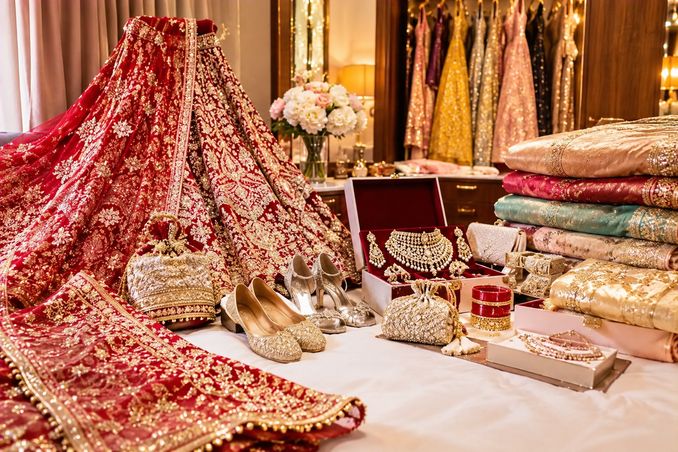
How to Build a Bridal Trousseau at a Glance
|
Step
|
What to Do
|
|
1
|
Understand what a trousseau actually includes
|
|
2
|
List your wedding functions and outfit count per function
|
|
3
|
Set a budget split across outfits, jewellery and essentials
|
|
4
|
Shop wedding-day and function outfits first
|
|
5
|
Add jewellery, footwear, bags and dupattas
|
|
6
|
Pack lingerie, shapewear and a beauty emergency kit
|
|
7
|
Pack everything function-wise and label each box or bag
|
|
8
|
Adjust packing if you are travelling for a destination wedding
|
Start this process at least six to eight months before the wedding date, especially if any outfit needs custom tailoring or embroidery work.
Planning your bridal trousseau and want help shortlisting designers and jewellery vendors?
Share your wedding date, city and budget to get started.
Find Bridal Wear
What Is a Bridal Trousseau?
A bridal trousseau is the full collection of outfits, jewellery, footwear and personal essentials a bride prepares for her wedding functions and for the first few months of married life. It is not the same as a single bridal outfit or a wedding shopping spree. It is a planned wardrobe that covers every function on the wedding calendar, from haldi to post-wedding family visits.
In most Indian weddings, the trousseau also carries some cultural weight. Families often choose outfit colours and pieces that carry meaning, and some items, such as a chooda or a first saree gifted by the in-laws, are tied to specific rituals. Even so, a modern trousseau is built for practical use first, so comfort and wearability should guide most of your choices.
For a curated list of bridal wear designers and outfit inspiration, explore Plan4Event’s bridal wear collection.
How to Start Building a Bridal Trousseau
Before you buy a single outfit, write down your actual wedding schedule. List every function you will attend as a bride, from the roka to the post-wedding griha pravesh, and note how many days each function spans. A two-day wedding needs a very different trousseau from a five-day one.
Once your function list is ready, decide on a realistic outfit count. For a short, intimate wedding with four or five functions, four to six outfits are usually enough. For a longer traditional wedding with seven or eight functions, brides commonly plan for ten to fifteen outfits, including a few lighter pieces for post-wedding family events.
Avoid shopping outfit by outfit without a list. It is the easiest way to end up with three heavy lehengas in similar colours and nothing light or comfortable for daytime functions or travel.
Bridal Trousseau Budget: How to Plan Spending Across Categories
A trousseau budget works best when it is split by category before you start shopping, not decided outfit by outfit as you go along.
As a general guide, wedding-day and reception outfits usually take up the largest share of the budget, since these are the most photographed and most elaborate pieces. Function outfits for haldi, mehendi, sangeet and engagement come next, followed by jewellery, footwear and bags. Everyday ethnic wear and honeymoon or western outfits usually need the smallest share, since these pieces are simpler and more widely available at lower price points.
A simple way to plan is this: decide your total trousseau budget first, then set rough percentages for each category before shopping begins. For example, you might set aside a larger portion for the two or three main bridal outfits, a moderate portion for function wear, and smaller fixed amounts for jewellery, footwear and everyday pieces. Write these numbers down and track your spending against them as you shop, so one category does not quietly eat into the budget meant for another.
Keep a small buffer of ten to fifteen percent for last-minute additions, since most brides end up needing one extra outfit or accessory closer to the wedding date.
Essential Wedding Outfits for Your Bridal Trousseau
Every trousseau needs a core set of outfits built around the main wedding events.
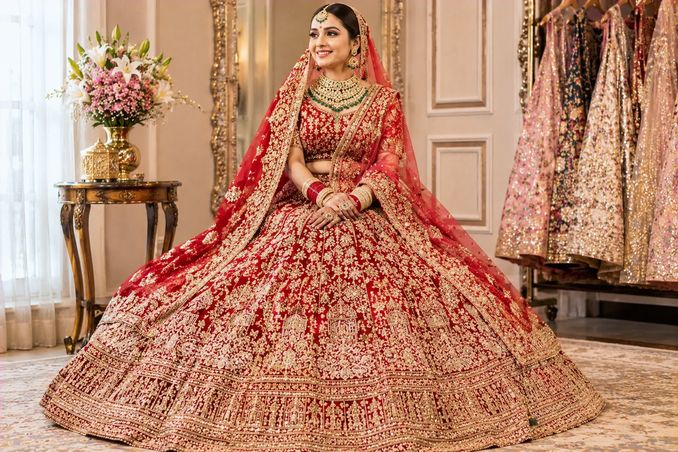
Wedding day outfit: Your primary bridal lehenga, saree or regional bridal outfit. This is usually the most heavily embroidered and expensive piece in the trousseau, so prioritise comfort in the blouse and waistband along with the design.
Reception outfit: A second bridal look, often lighter in weight and more contemporary in style than the wedding day outfit. Many brides choose a gown, a lighter lehenga or a drape saree for this function.
Engagement or roka outfit: A lehenga, saree or Indo-western gown, usually lighter than the wedding-day outfit since this function is often shorter and less formal.
When choosing these three core pieces, try them on with the blouse and dupatta fully styled, and sit down in them for a few minutes during the trial. A lehenga that looks perfect standing up can feel very different after an hour of sitting through rituals.
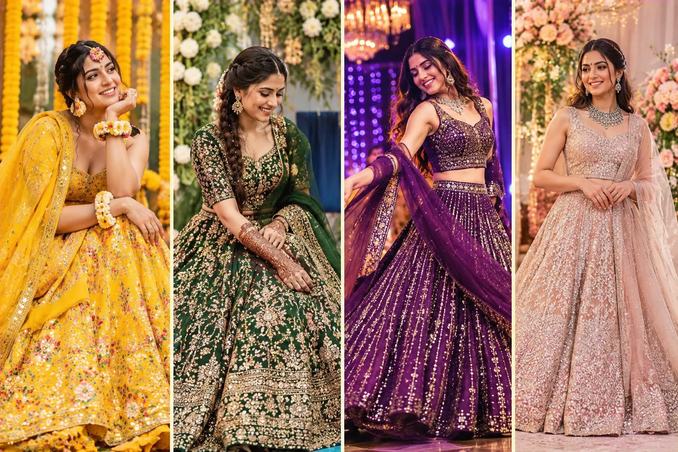
Bridal Trousseau Outfits for Haldi, Mehendi, Sangeet & Engagement
These functions need outfits that are comfortable, photo-friendly and realistic about possible staining or movement.
Haldi: Choose a simple cotton, mulmul or chanderi set in yellow, white or a light floral print. Haldi outfits almost always get stained with turmeric paste, so avoid spending too much on this piece or using delicate embroidery that cannot handle a wash.
Mehendi: A sharara, anarkali or light lehenga in bright colours such as green, orange or yellow works well. Keep sleeves comfortable since mehendi application can take hours, and choose an outfit that does not need constant adjusting while your hands are wet with henna.
Sangeet: Pick something you can actually dance in. A lighter lehenga, a sharara set or a flowing gown gives you movement without worrying about the outfit slipping or the dupatta falling repeatedly.
Engagement: A lehenga, saree or Indo-western gown in a colour different from your main wedding outfit, so your look does not feel repetitive across the wedding week.
Reception and Cocktail Outfits for Your Bridal Trousseau
The reception outfit is often the second most photographed look after the wedding day, so give it proper planning time. Many brides now choose a gown, a fusion lehenga or a pre-draped saree for the reception, moving away from traditional heavy lehengas for this particular function.
If your wedding includes a separate cocktail party, plan a third evening look such as a shorter gown, a sharara set or an Indo-western outfit. Keep the colour palette different from your wedding and reception outfits so your overall trousseau does not feel repetitive in photos.
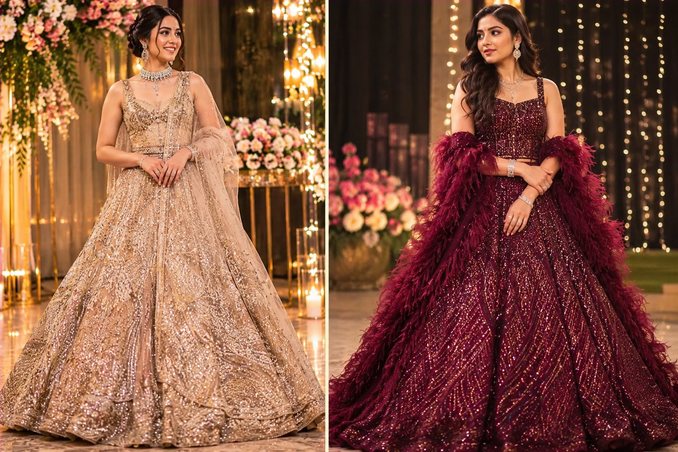
For both reception and cocktail outfits, prioritise a good fit over heavy embellishment. A well-fitted simpler outfit photographs better than an oversized or loose heavily worked piece.
Post-Wedding and Everyday Ethnic Wear for a Bridal Trousseau
Once the wedding functions end, your everyday wardrobe becomes just as important as your wedding-day outfits. This part of the trousseau is often underplanned, leaving new brides with nothing comfortable to wear for family visits, pujas or casual outings in the first few weeks of married life.
Plan for four to six sarees in a mix of silk, georgette and cotton, with blouses stitched to your current measurements. Add four to six suit sets or anarkalis for family lunches, visits and everyday errands. Include one or two lighter lehengas as well, useful for smaller family weddings or festivals in your first year of marriage.
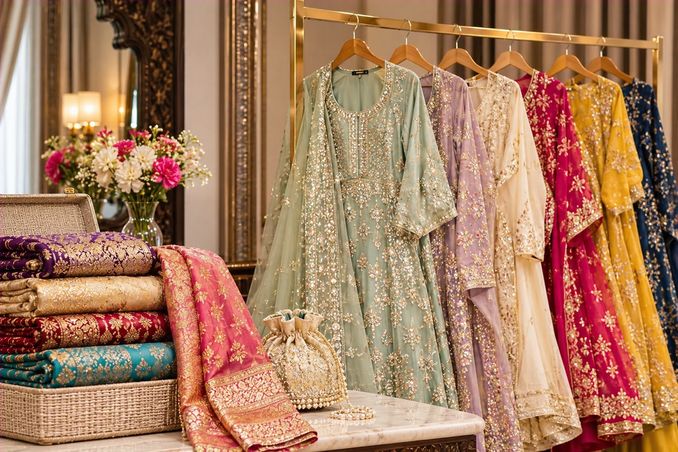
Choose fabrics that are easy to maintain and wear in your local climate, rather than only picking pieces for how they photograph.
Western Wear, Casuals and Honeymoon Outfits for a Bridal Trousseau
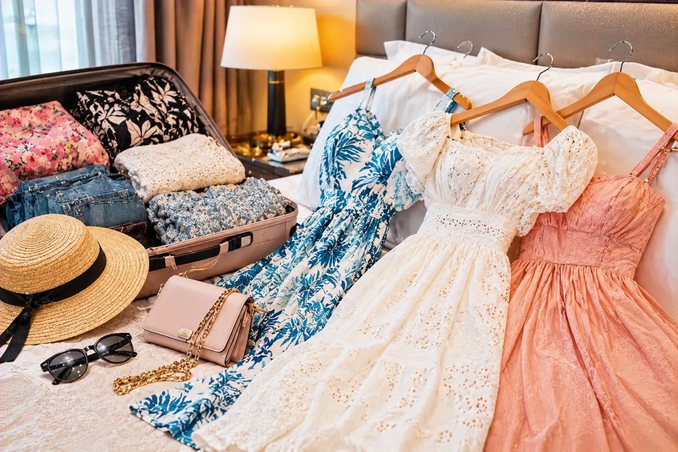
If you are travelling for a honeymoon, this part of your trousseau needs separate planning from your ethnic wear. Pack a mix of casual daywear, one or two smart-casual outfits for dinners, and swimwear or resort wear if your destination calls for it.
For everyday use after the wedding, a few comfortable western pieces such as jeans, tops, dresses and a couple of smart outfits for outings help balance out a trousseau that otherwise leans heavily towards occasion wear. Keep this section simple. It does not need the same investment as your bridal and function outfits, since these pieces are usually easy to shop for later as well.
Bridal Jewellery Checklist: Heirloom, Statement and Everyday Pieces
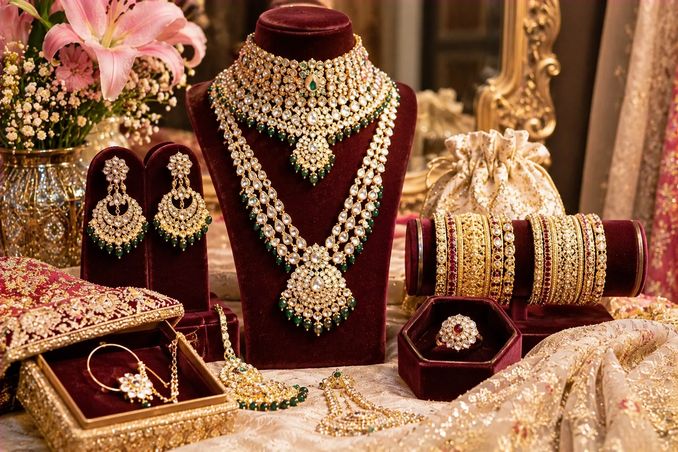
Bridal jewellery usually falls into three groups, and each needs separate planning.
Heirloom or family jewellery: Pieces passed down or gifted by family, often worn for the main wedding ceremony. Get these checked and cleaned by a trusted jeweller well before the wedding, and confirm they fit comfortably with your final bridal outfit.
Statement bridal sets: The main necklace, earrings, maang tikka, nath and bangles worn for your wedding day and reception. These are usually the most expensive jewellery purchases in the trousseau, so shop early enough to compare designs and get any resizing done in time.
Everyday and lighter sets: Smaller jewellery pieces for function outfits, family visits and daily wear after the wedding. These do not need to be as elaborate, but having two or three versatile sets saves you from repeating the same heavy pieces for every outing.
Always try on jewellery with the actual outfit and hairstyle you plan to wear, since a necklace that looks right alone can clash with certain necklines or hairstyles.
For help coordinating jewellery, outfits and overall bridal styling alongside your wedding planning, explore Plan4Event’s wedding planners services.
Footwear, Bags and Dupattas for a Bridal Trousseau
Footwear is one of the most skipped categories in trousseau planning, yet it directly affects your comfort through long wedding days.
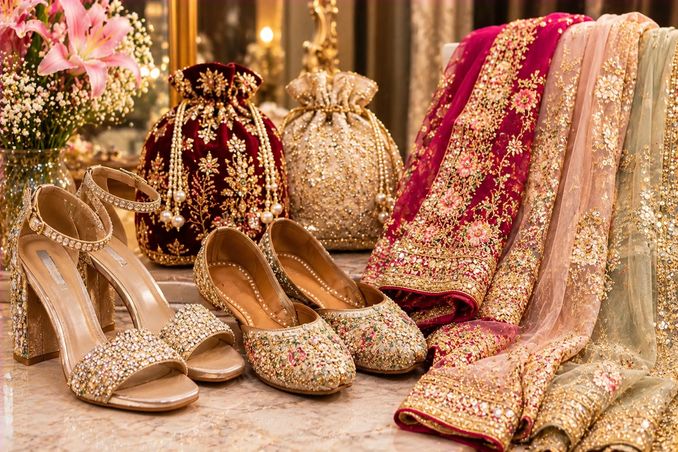
Plan for embellished bridal footwear for the wedding day, a comfortable pair of flats or juttis for long rituals and standing functions, heels for the reception, and simple sandals for everyday wear. Break in new footwear at home before the wedding day, since a brand-new pair worn for the first time during a long ceremony often leads to blisters.
For bags, a few small clutches or potlis in colours that match your function outfits are usually enough. You do not need a separate bag for every single outfit.
Dupattas deserve their own attention as well. If your wedding-day dupatta is heavily embroidered, consider carrying a lighter backup dupatta for parts of the day when you need more ease of movement, such as during meals or long sitting rituals.
Lingerie, Shapewear and Innerwear Essentials for Brides
This category is easy to forget, but it has a direct effect on how comfortable and confident you feel in your outfits. Buy shapewear and innerwear that matches the cut and fabric of your main outfits, rather than relying on whatever you already own.
For heavy lehengas, proper shapewear and a well-fitted blouse lining make a noticeable difference to how the outfit sits through the day. For lighter outfits such as sarees or suits, comfortable breathable innerwear matters more than shaping, especially for long functions in warm weather.
Buy these pieces early enough to wear them once or twice before the wedding, so you know they are comfortable and correctly sized, rather than testing them for the first time on the actual day.
Beauty, Grooming and Emergency Kit for a Bridal Trousseau
Alongside outfits and jewellery, pack a small beauty and emergency kit for each function day. This should include your regular skincare products, a travel-size makeup kit for touch-ups, blotting sheets, a compact mirror, safety pins, fabric tape, a small sewing kit and pain relief tablets.
If you are getting professional makeup done for most functions, keep a lighter personal kit just for touch-ups between events, such as lipstick, a setting spray and tissues. For outfit emergencies, a few safety pins and a roll of fabric tape can fix a loose dupatta or a slipping blouse strap in minutes, without needing a full outfit change.
How to Pack a Bridal Trousseau: Outfit-Wise, Function-Wise and Travel-Friendly
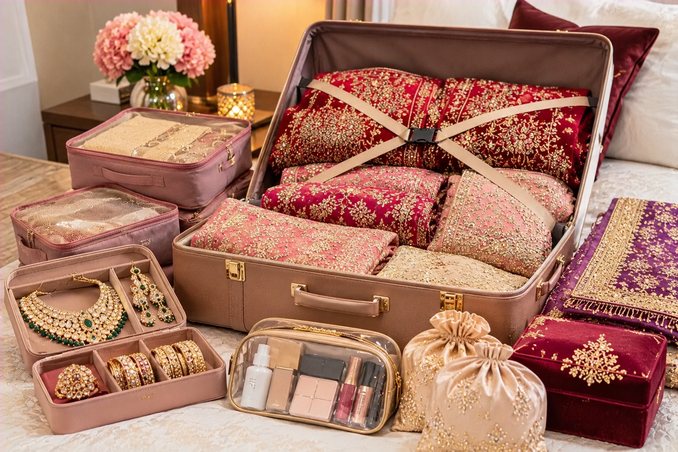
Once your trousseau is ready, packing it properly matters just as much as buying the right pieces. Pack each outfit as a complete set, including the blouse, dupatta, matching jewellery and footwear, in one bag or box. This avoids last-minute searching for a missing blouse or the right pair of earrings on the day of the function.
Label each bag or box clearly with the function name, such as “Haldi” or “Reception”, so anyone helping you get ready can find the right outfit quickly without opening every bag.
Use breathable saree covers or garment bags for silk and heavily embroidered pieces, rather than plastic covers, which can trap moisture and damage delicate fabric or embroidery over time. Store jewellery separately in soft pouches or a jewellery organiser to avoid tangling or scratching between pieces.
Need help planning outfits, jewellery, makeup and wedding-day logistics alongside your trousseau?
Share your event details to get end-to-end wedding planning support.
Plan My Event
Bridal Trousseau Packing Tips for Destination Weddings
Destination weddings add travel logistics on top of regular packing, so plan a little differently.
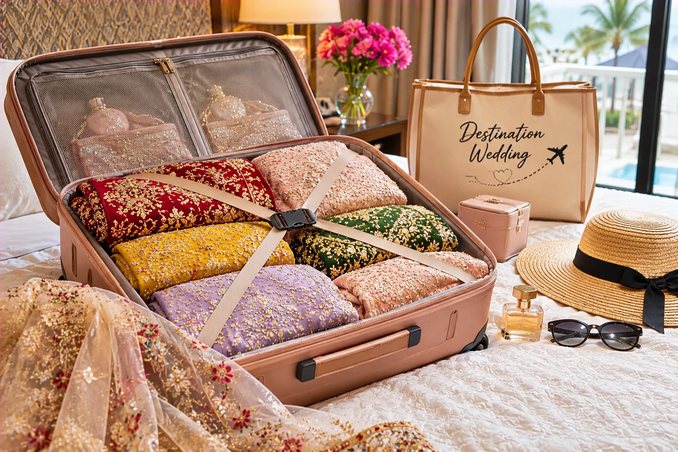
Carry your most important outfit, such as your main wedding-day lehenga or saree, as carry-on luggage rather than checked baggage, so it is never at risk of getting lost or delayed. Roll lighter outfits such as suits and casual wear to save space, but fold heavier lehengas and silk sarees flat to avoid deep creases that are hard to remove at the destination.
Carry a small travel steamer or ask your venue in advance if ironing or steaming services are available, since heavy embroidered fabric often needs gentle steaming rather than direct ironing. Pack one extra set of innerwear and basic touch-up makeup in your carry-on as well, in case checked luggage is delayed.
If your destination has very different weather from home, check the forecast closer to the date and adjust fabric choices, especially for outdoor functions.
Common Bridal Trousseau Mistakes to Avoid
Many brides repeat the same few mistakes while building a trousseau.
Buying too many heavy outfits and too few comfortable ones: A trousseau full of only heavy lehengas leaves you with nothing easy to wear for daytime functions, travel or family visits.
Skipping the trial under real conditions: Trying an outfit only while standing in a showroom mirror does not show you how it feels while sitting, walking or dancing for hours.
Ignoring the climate: Choosing fabrics that do not suit your wedding location’s weather leads to discomfort, especially for outdoor functions or summer weddings.
Leaving jewellery and footwear for the last minute: Rushed jewellery resizing or a new, unworn pair of shoes on the wedding day often leads to avoidable discomfort.
Not setting a category-wise budget: Without a budget split, most brides overspend on one or two statement outfits and are left with very little for everyday wear, footwear or accessories.
Bridal Trousseau Checklist for Brides
Use this as a quick final check before your wedding week.
- Wedding-day outfit, with blouse, dupatta and jewellery fitted together
- Reception and, if needed, cocktail outfit
- Haldi, mehendi, sangeet and engagement outfits
- Four to six everyday sarees or suits for post-wedding use
- Honeymoon and casual western wear, if needed
- Full bridal jewellery set, plus two or three lighter everyday sets
- Footwear for each major function, including comfortable flats
- Clutches or potlis matching your function outfits
- Properly fitted shapewear and innerwear for each major outfit
- Small beauty touch-up kit and an outfit emergency kit
- All outfits packed function-wise with jewellery and footwear together
- Breathable garment bags or saree covers for silk and embroidered pieces
- Main wedding outfit packed as carry-on, if travelling for the wedding
For help finding bridal wear designers with verified portfolios and reviews, explore Plan4Event’s bridal wear listing.
Plan Your Bridal Trousseau Shopping with Plan4Event
Building a trousseau involves far more coordination than most brides expect, from comparing lehenga designers to booking jewellery fittings around your wedding date. Doing this alongside venue bookings, makeup trials and décor decisions can get overwhelming fast.
Plan4Event brings bridal wear designers, jewellery vendors and other wedding essentials onto one platform, so you can browse verified bridal wear options, compare designs and pricing, and plan your trousseau shopping timeline alongside the rest of your wedding bookings. If you are still finalising outfits for your main wedding-day look or reception, browsing through Plan4Event’s bridal wear listings can help you compare more designers in one place before you commit to your final pieces.
FAQs About Building a Bridal Trousseau
1. How many outfits should a bridal trousseau have?
This depends on your wedding length and personal preference. An intimate wedding with four or five functions usually needs four to six outfits, while a longer traditional wedding with seven or eight functions often needs ten to fifteen outfits, including a few for post-wedding use.
2. When should I start shopping for my bridal trousseau?
Start at least six to eight months before the wedding date, especially if any outfit needs custom tailoring, embroidery work or jewellery resizing. Starting late limits your choices to ready-made pieces only.
3. What is the difference between a bridal trousseau and regular wedding shopping?
Regular wedding shopping often focuses only on the main bridal outfit. A trousseau is a complete, planned wardrobe covering every wedding function, plus jewellery, footwear and everyday essentials for the weeks after the wedding.
4. How should I budget for a bridal trousseau?
Set a total budget first, then divide it across categories such as wedding-day and reception outfits, function wear, jewellery, footwear and everyday pieces, before you start shopping. This prevents overspending on one category at the cost of another.
5. What should I prioritise if my trousseau budget is limited?
Prioritise your wedding-day outfit, reception outfit and jewellery first, since these are the most visible and most photographed. Keep haldi and mehendi outfits simple and affordable, since they are likely to get stained or worn only once.
6. How do I pack a bridal trousseau for a destination wedding?
Carry your main wedding outfit as hand luggage, fold heavy silk pieces flat to avoid creases, roll lighter outfits to save space, and pack a small emergency kit with extra innerwear and basic makeup in your carry-on bag.
Share your wedding date, city and budget to find bridal wear designers and plan your trousseau shopping with ease.
Plan My Event