110+ Teej Mehndi Designs 2026 - Arabic, Simple & Bridal
Teej without mehndi barely counts as Teej. Whether you are gearing up for Kajari Teej on 31 August or saving the good stuff for Hartalika Teej on 13 or 14 September, your hands deserve a design that photographs well against a green saree and survives a full day of puja, swings, and dance. This guide covers the latest mehndi design ideas for Teej 2026 across every style people search for: easy front hand mehndi design, detailed back hand mehndi design, full hand bridal mehndi design, finger mehndi design, and feet mehndi design, along with Arabic mehndi and traditional Rajasthani patterns you will not find bunched together anywhere else. Arabic mehndi is still the easiest style to pull off this season since the spacing between motifs means less sitting time and a bolder look once it darkens, but there is something here whether you have twenty minutes or two hours to spare.
Scroll through, screenshot your favourites, and if you would rather leave the artistry to a professional, browse verified mehndi and bridal vendors near you on Plan4Event and lock one in before the last-minute rush.
Teej 2026 Dates at a Glance
|
Festival
|
2026 Date
|
|
Hariyali Teej
|
Saturday, 15 August (already celebrated)
|
|
Kajari Teej
|
Monday, 31 August
|
|
Hartalika Teej
|
13 or 14 September, depending on your regional panchang
|
Book your artist two days ahead of whichever Teej you are celebrating. Mehndi keeps darkening for 24 to 48 hours after application, so same-day mehndi will always look lighter in photos than mehndi applied a day or two in advance. The designs below work equally well as Hariyali Teej mehndi design ideas, Kajari Teej mehndi design ideas, or Hartalika Teej mehndi design ideas, since the patterns do not change across the three, only the outfit and mood around them do.
Arabic Bridal Mehndi Designs for Teej
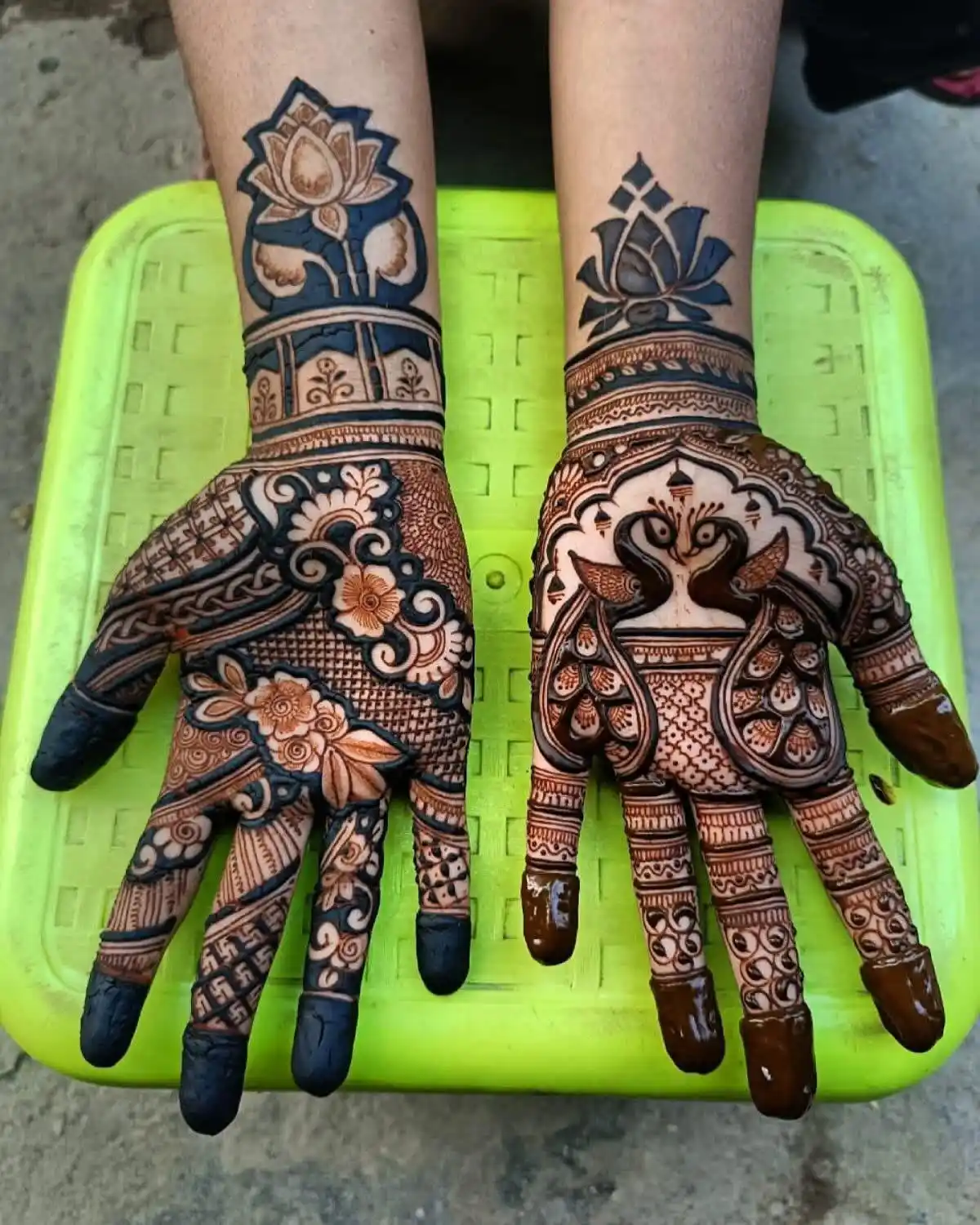
Heavier, more elaborate Arabic patterns for anyone who wants their hands to be the main event this Teej.
1. Full Jaal and Floral Fusion Fine lace-like jaal work mixed with rounded florals. This one takes patience but looks like it belongs at a wedding, not just a Teej gathering.
2. Bold Rose Vine, Wrist to Fingertips Big, confident roses with generous spacing between them. Perfect if you want drama without a fully packed hand.
3. Peacock and Floral Centerpiece The peacock sits right at the center of the back of the hand, framed by loose floral trails on either side.
4. Diagonal Vine with Shaded Leaves A slanted vine cuts across the hand instead of running straight up, which makes the whole design feel a little less predictable.
5. Thick Stain-Style Arabic Florals Less outline work, more solid fill. This style darkens beautifully and holds up well through a full day of festivities.
6. Geometric Arabic with Triangle Fillers Straight lines and angular fillers instead of the usual curves. A good pick if florals feel too soft for your taste.
7. Swan Focal Point Design Swans stand in for the usual peacock here, framed by delicate vines. Romantic without being over the top.
8. Filigree Lace Pattern This one genuinely looks like lace once it is done. Best left to an artist who specialises in fine linework.
9. Rectangle Panel Layout Instead of flowing patterns, the design sits inside clean rectangular panels. Structured, modern, and easy to spot in a crowd.
10. Jharokha-Inspired Arabic Mehndi A nod to Rajasthan's palace windows, worked into an otherwise standard Arabic layout. Instant conversation starter at a Jaipur Teej gathering.
Simple and Easy Front Hand Mehndi Designs for Teej
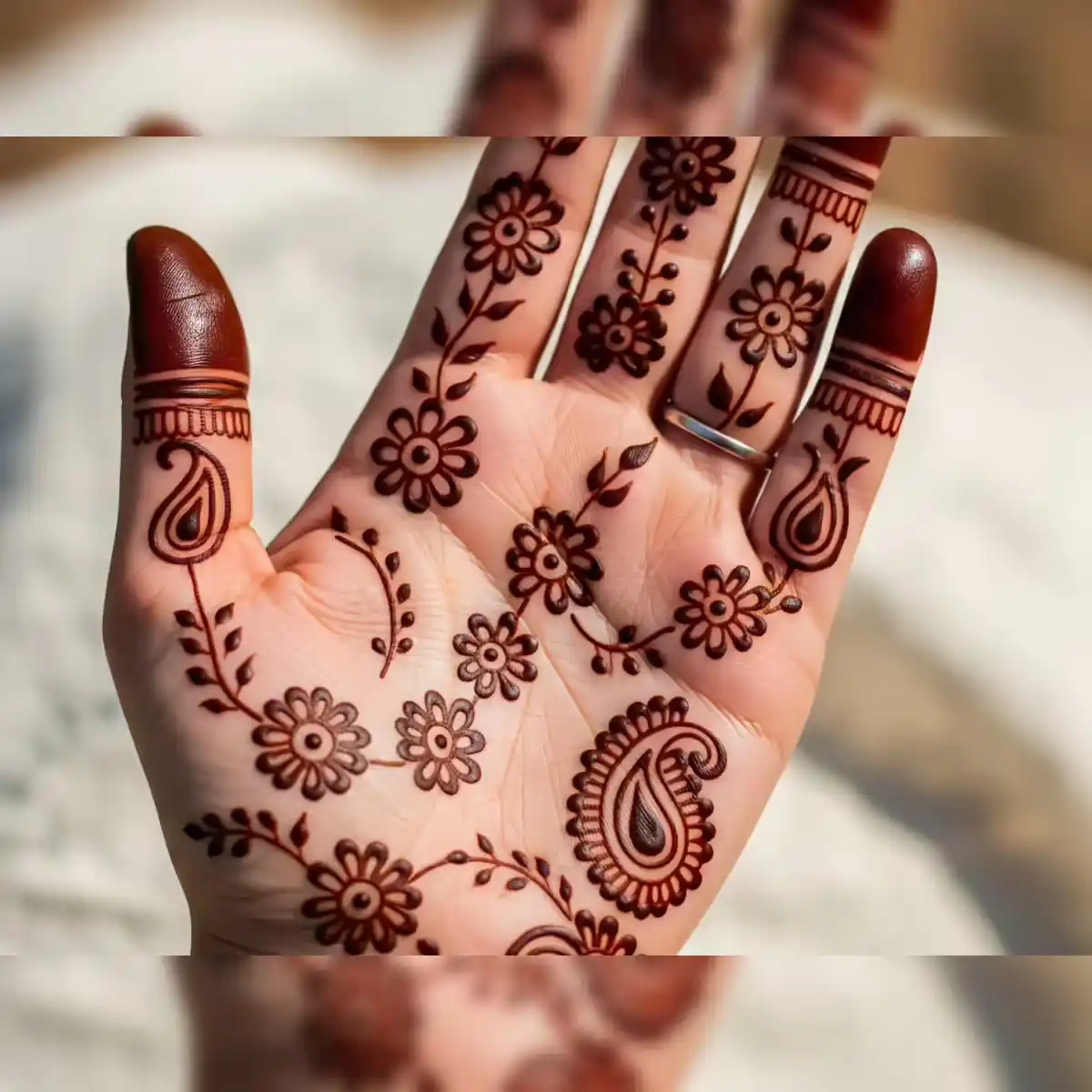
For anyone who needs their hands free for cooking, puja, or a full day of running around, these simple front hand mehndi designs and easy Arabic patterns take the least time and still look festive in photos.
11. Single Vine, Wrist to Middle Finger One clean line of florals up the center of the hand. Takes under fifteen minutes and still photographs well.
12. Dotted Trail with Three Flowers A scattered trail of dots leading up to three small blooms. Understated but far from boring.
13. Wrist Cuff, Bare Hands All the detail sits at the wrist like a bracelet, leaving your palms and fingers completely bare. Great if you are wearing rings you do not want covered.
14. Crescent Moon with Fine Dots A small crescent on the back of the palm, ringed with tiny dots. Fitting for a festival tied to fasting and moonlit rituals.
15. Three-Finger Design Detail on just three fingers, nothing else. Quick, minimal, and easy to touch up if it smudges during the day.
16. Minimal Mandala, No Fill Just the outline of a mandala at the center of the palm, no shading or fill. Looks intentional rather than incomplete.
17. Leaf Branch Along the Hand Scattered leaves running along the side of the hand and wrist. For the bride or guest who does not want to look "extra."
18. Chand-Tara Motif Near the Thumb A small moon and star sit near the base of the thumb. Easy to combine with almost any other simple design on the rest of the hand.
19. Two Parallel Lines with Dot Fillers Two thin lines run front to back of the hand with dots filling the gap between them. Symmetrical and satisfying to look at.
20. Fingertip Dots with a Ring Band Dots at each fingertip paired with a single ring-style band around one finger. A five-minute design that still reads as deliberate.
Rajasthani and Traditional Teej Mehndi Designs
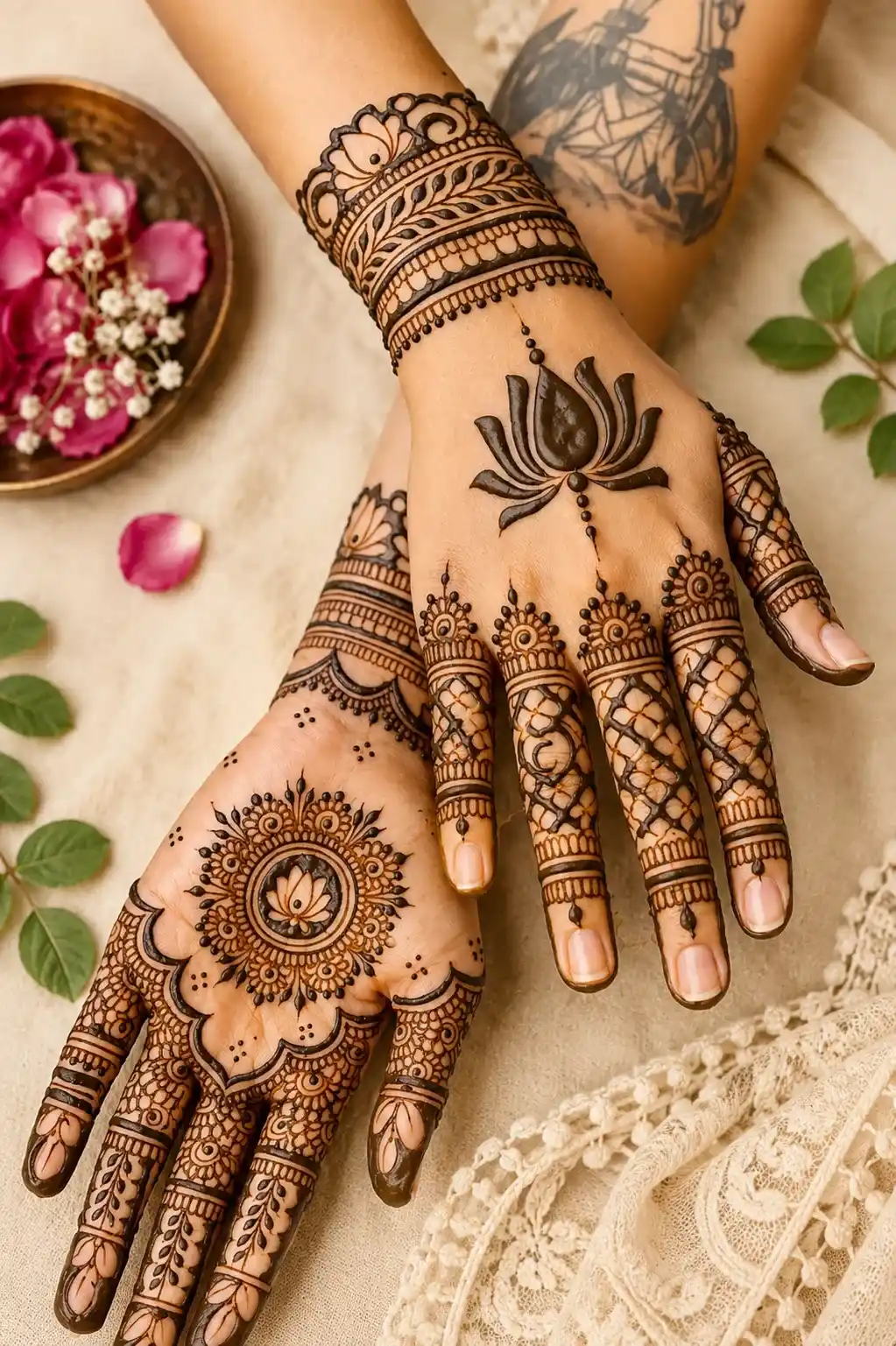
Teej has deep roots in Rajasthan, and these patterns lean into that heritage instead of the usual Arabic or Indo-Western looks most round-ups stick to.
21. Gangaur-Inspired Peacock Mandala Modelled on the motifs used during Jaipur's Gangaur celebrations, with a peacock worked into the center of the mandala.
22. Jharokha Window Motif Palace window shapes, straight out of Jaipur's havelis, repeated across the back of the hand.
23. Full Palm Rajasthani Jaal Dense, traditional net-work covering the whole palm. This is the design most Rajasthani grandmothers will recognise instantly.
24. Camel and Haveli Silhouette A small camel walking past a haveli outline, tucked into the corner of a larger floral design. A distinctly Jaipur touch.
25. Marwari Checkerboard Fill An alternating checkerboard fill pattern, traditional to Marwari mehndi work and rarely seen outside Rajasthan.
26. Gol Tikki Centerpiece A round motif sits dead center of the palm, bordered by a thin ring. Simple, symmetrical, and very traditional.
27. Bandhani-Inspired Dot Grid A tight grid of dots that echoes the bandhani tie-dye print, tying your mehndi directly to your outfit if you are wearing bandhani for Teej.
28. Kalash and Diya Motifs Kalash and diya shapes worked into the design, fitting for a festival built around fasting and evening puja.
If bandhani is part of your Teej wardrobe this year, see how Rajasthani brides are styling the tie-dye classic for outfit pairing ideas that match this mehndi style.
Back Hand Mehndi Designs for Teej
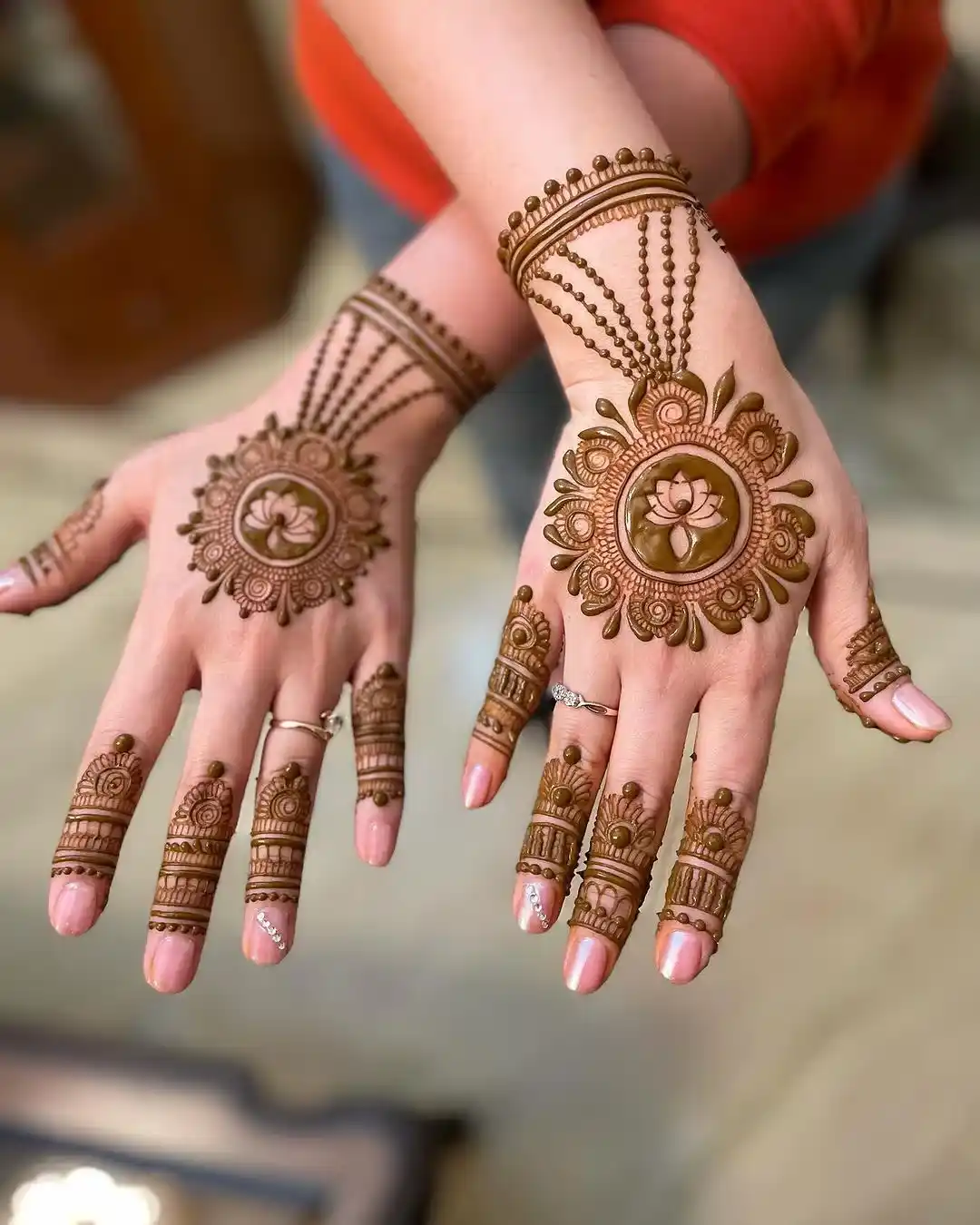
29. Floral Garden Spread A full garden of florals covering the back of the hand, with no single motif dominating.
30. Half-Hand Jaal Detailing Jaal work fills one half of the back of the hand while the other half stays bare. A nice middle ground between minimal and heavy.
31. Mini Heart Cluster Near the Knuckles Tiny hearts grouped near the knuckles instead of the usual florals. Sweet without being childish.
32. Trellis Pattern Straight, crossing lines that resemble a garden trellis. Clean and geometric.
33. Vintage Rose Centerpiece A single detailed rose sits at the center, with thinner vines branching outward.
34. Contemporary Pattern with Negative Space Modern mehndi that uses bare skin as part of the design instead of filling every inch.
Full Hand Bridal-Style Mehndi for Teej
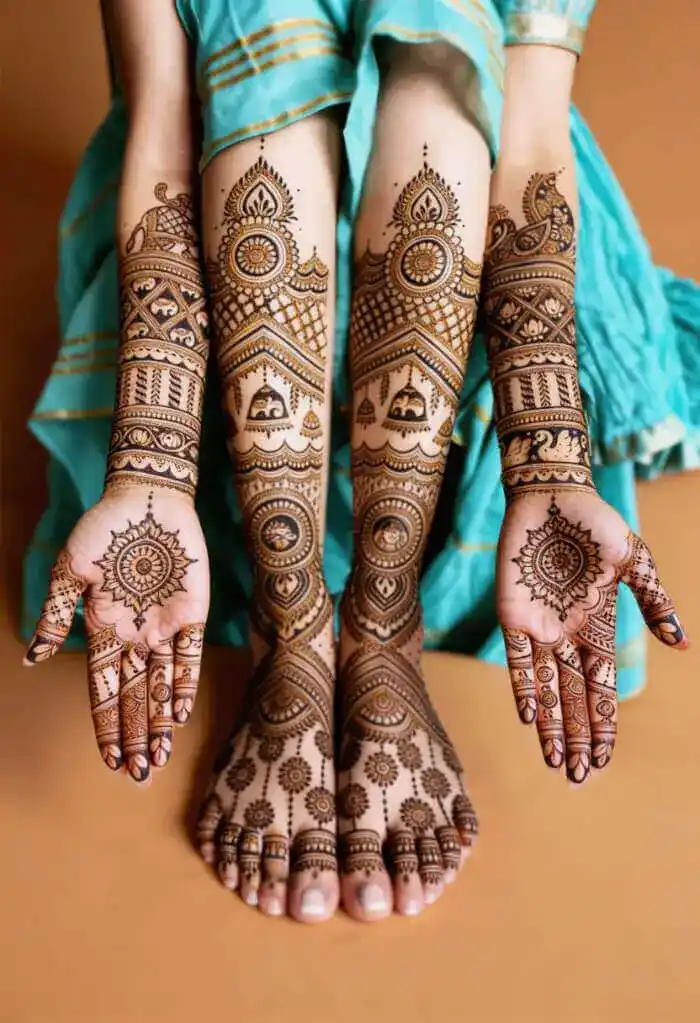
For anyone treating this Teej like a mini bridal moment.
35. Complete Jaal to the Elbow Coverage that does not stop at the wrist. If you have the time, this is the design that gets noticed first.
36. Layered Floral Illustration with Mandala Center Multiple floral layers building up to a mandala at the palm's center. Detailed but still readable from a distance.
37. Peacock and Lotus Combination Two of mehndi's most classic motifs, worked together across both palms for symmetry.
38. Three-Panel Design The hand is divided into three sections, each with a different motif. Great if you cannot decide on just one style.
39. Heavy Filigree Backhand Coverage Dense, fine-lined coverage across the entire back of the hand. This is the design that needs the most sitting time on this list.
Finger and Fingertip Mehndi Designs for Teej
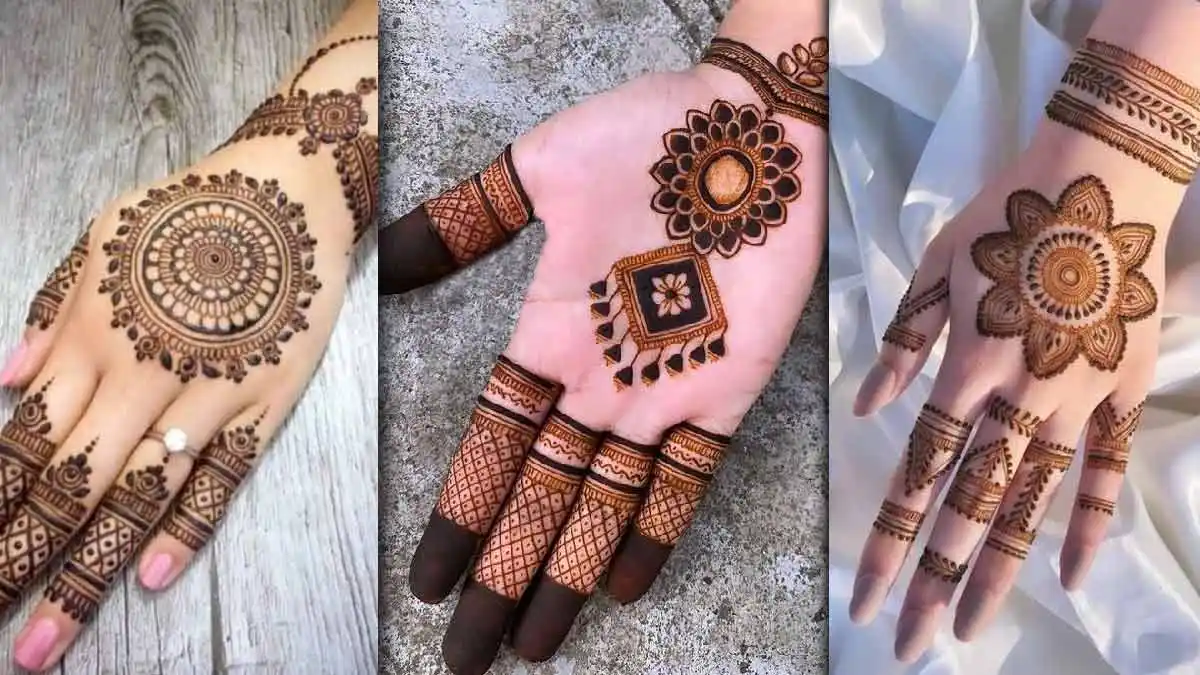
Minimal but photogenic, and ideal if your palms need to stay mostly bare. These finger mehndi designs work well for guests or anyone who just wants a light, quick look.
40. Mesh or Jaali Fingertips A fine mesh pattern across every fingertip. Looks intricate up close but takes barely any time to apply.
41. Small Jaal on Two Fingers Only Detail limited to just the index and middle finger, leaving the rest of the hand completely plain.
42. Abstract Swirl Fingertips Loose, abstract swirls instead of structured florals. Works well if your artist has a free-hand style.
43. Leaf-Wrapped Fingers A single leaf motif wraps around each finger like a ring. Simple, repeatable, and quick to do on a group of guests.
Feet and Leg Mehndi Designs for Teej
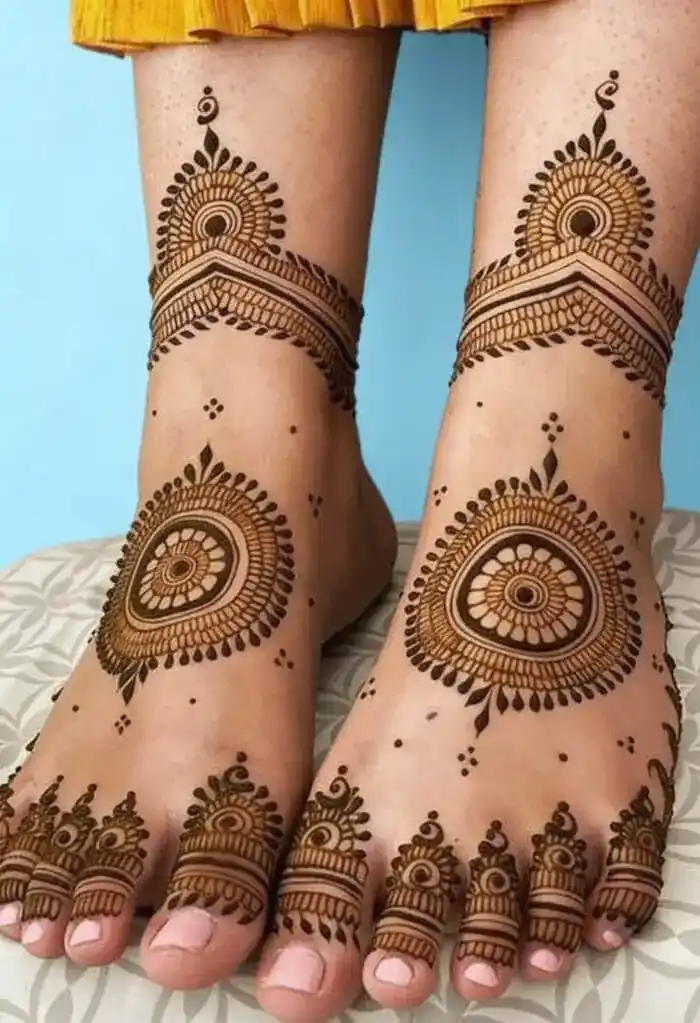
44. Anklet-Style Florals Small florals arranged to look like an anklet chain, worn without the actual jewellery.
45. Chand Motif Near the Big Toe A small crescent moon placed near the big toe, echoing the moon-focused rituals of Teej.
46. Mandala with Lotus Center at the Ankle A mandala centered right at the ankle bone, with a lotus worked into the middle.
47. Half-and-Half Foot Design Detailed toes paired with a plain heel. Comfortable to wear in sandals without smudging.
More New Mehndi Design Ideas for Teej 2026
48. Sun and moon motifs mirrored across both hands
49. Green-toned natural henna for a festival-fresh finish
50. Symmetrical two-hand pattern that mirrors on both sides
51. Fusion design mixing Arabic florals with a Rajasthani border
52. Delicate daisy chain running along the forearm
53. Haathphool-style pattern that doubles as jewellery
54. Classic net-and-dot fill for quick, even coverage
55. Statement floral burst as the single focal point
56. Thin double-line pattern running down each finger
57. Jaal pattern with tiny bead-style dots for texture
58. Compact bridal-style pattern sized for guests, not the bride
59. Twenty-minute Arabic pattern for a last-minute Teej plan
60. Checkerboard-fill Arabic hybrid for a modern edge
That is 60-plus standalone ideas across seven styles, and most artists can mix elements from two or three of these categories if nothing here is an exact match for what you have in mind. Bring a few screenshots to your appointment. It genuinely speeds things up and gets you closer to what you actually pictured.
Teej Mehndi Artist Prices in India (2026)
Prices shift by city and by how much detail you want, but here is a realistic range based on current market rates:
- Simple or minimal designs (wrist, fingers only): ₹300 to ₹800 per person
- Arabic mehndi, one hand: ₹500 to ₹1,500
- Full hand, both sides, festive design: ₹1,500 to ₹4,000
- Bridal-style full hand and feet: ₹4,000 to ₹15,000, and higher for in-demand celebrity artists
- Home service in Jaipur, Delhi NCR, and other metros: usually adds ₹200 to ₹500 on top of the base price
Tier 2 and Tier 3 cities tend to run 20 to 30 percent lower than these figures. Confirm the final price and any travel charges before the artist arrives, since some vendors quote per hand and others quote per person.
If Teej is leading into a bigger celebration this year, a wedding planner cost guide for India can help you budget the rest of it, and if a wedding venue is still on your list, these destination wedding packages across India are worth a look too.
How to Get a Darker, Longer-Lasting Mehndi Stain
- Apply mehndi at least 6 to 8 hours before you need the darkest colour. The stain keeps developing after the paste comes off, not while it is still on.
- Avoid water for the first 6 hours. A sugar-lemon mix dabbed on the dried paste helps it stay on longer without cracking.
- Keep the paste on overnight if your schedule allows it. Longer contact time means a deeper stain.
- Once you scrape off the paste, skip soap for the first 24 hours. Wipe, do not wash.
- A light coat of mustard oil or balm once the colour sets helps lock it in and slows the fading.
FAQs on Teej Mehndi Designs
Which Teej is coming up next in 2026?
Kajari Teej falls on 31 August 2026, followed by Hartalika Teej on 13 or 14 September, depending on the panchang your region follows. Hariyali Teej, the first of the three, was on 15 August.
Which hand should be done first for Teej mehndi?
There is no strict rule, though many artists start with the left hand since most people are right-handed and need that hand freer through the rest of the day.
How long does Arabic mehndi take to apply?
A single hand usually takes 20 to 40 minutes for Arabic designs, since the spaced-out pattern uses less detail than traditional jaal work. Full hand bridal-style mehndi can take two to three hours per hand.
Is Arabic mehndi or simple mehndi better for Teej?
Arabic mehndi suits Teej well because it dries faster and still looks festive against a green outfit. Simple mehndi works better if you are fasting all day and need your hands free for puja and cooking.
How much does bridal mehndi cost in Jaipur?
Bridal-style full hand and feet mehndi in Jaipur typically runs ₹4,000 to ₹12,000, depending on the artist's experience and how intricate the design is. Simpler festive designs for Teej cost far less, usually ₹500 to ₹2,000 per hand.
Can I apply mehndi the same day as Teej?
You can, but the colour will be lighter than if you apply it a day or two in advance. For the deepest stain, get your mehndi done the evening before Teej and let it sit overnight.
Why do women apply mehndi on Teej?
Mehndi on Teej is tied to Goddess Parvati and marital wellbeing. Married women apply it hoping for their husband's long life, and unmarried women apply it hoping for a good match. A darker stain is also considered a sign of a loving marriage, though that part is folklore rather than fact.
How long should I leave Teej mehndi paste on before scraping it off?
At least 6 to 8 hours for a decent stain. Overnight gives you the darkest result, since the longer the paste sits, the more it stains the skin. If you can manage it, apply your mehndi the night before Teej and let it work while you sleep.
Why is my mehndi not turning dark?
A few common reasons: the paste was scraped off too early, the henna cone was low quality or expired, or you washed the area with soap right after removing the paste. Try leaving the paste on longer next time, and dab on a lemon-sugar mix once it dries to help it bind better.
What should I do right after removing the mehndi paste for a darker stain?
Avoid water for a few hours. Once the initial orange colour appears, a light layer of mustard oil, clove oil, or even Vicks VapoRub on the area helps the stain deepen over the next day or two. This is an old trick that genuinely works for most people.
Is black henna safe to use for Teej?
Be careful with anything sold as "black henna." It often contains a chemical called PPD, which can cause skin reactions ranging from mild irritation to serious burns in sensitive skin. Natural henna paste is always reddish-brown to dark maroon, never jet black. If a mehndi artist offers instant black mehndi, ask what is in it before agreeing.
How many days before Teej should I book a mehndi artist?
For a simple design, one to two days ahead is fine. For a detailed Arabic or bridal-style design, or if you are booking a well-reviewed artist during peak Teej season, book at least a week in advance since good artists get fully booked fast around Kajari Teej and Hartalika Teej.
What is the difference between mehndi worn on Hariyali Teej, Kajari Teej, and Hartalika Teej?
The designs themselves do not really change across the three Teej festivals. What changes is the mood and the outfit pairing. Hariyali Teej mehndi is usually paired with green outfits and lighter, festive patterns. Hartalika Teej, being a stricter fasting day, often sees women choose slightly more elaborate, bridal-leaning designs since it is considered the most significant of the three.
Can men also apply mehndi on Teej?
Yes. It is traditionally a ritual for women, but it has become increasingly common for husbands, brothers, and other family members to get a small design done alongside the women in their family, especially matching or complementary patterns.
How can I remove mehndi quickly if I do not like the design?
Warm water with a bit of oil helps soften and lift wet or half-dried paste. Once the mehndi has fully stained the skin, exfoliating with a sugar scrub, or repeated washing with warm soapy water, will fade it faster than it would fade naturally, though it will not disappear instantly.
Does mehndi have any real health benefits, or is it just decorative?
Henna has natural cooling and mild antiseptic properties, which is part of why it became a wedding and festival tradition in hot climates in the first place. It is not a medical treatment, but the cooling effect on the palms and soles is a genuine, well-documented property of the plant.
Ready to book a mehndi artist along with the rest of your festive or wedding vendors? Find verified, reviewed mehndi and bridal vendors near you on Plan4Event and compare real prices before you decide.